The year 2026 is set to go down as the hottest in recorded history — and the insurance protection gap is wider than ever. Berkeley Earth is 95% confident that 2026 will take the record, driven by long-term climate change and an unusually powerful El Niño. The forecast was delivered to BBC News as COP31 opened in Antalya, Turkey, on 9 November 2026. The World Meteorological Organization (WMO) places 2026 among the four warmest years on record and expects El Niño to persist into 2027.
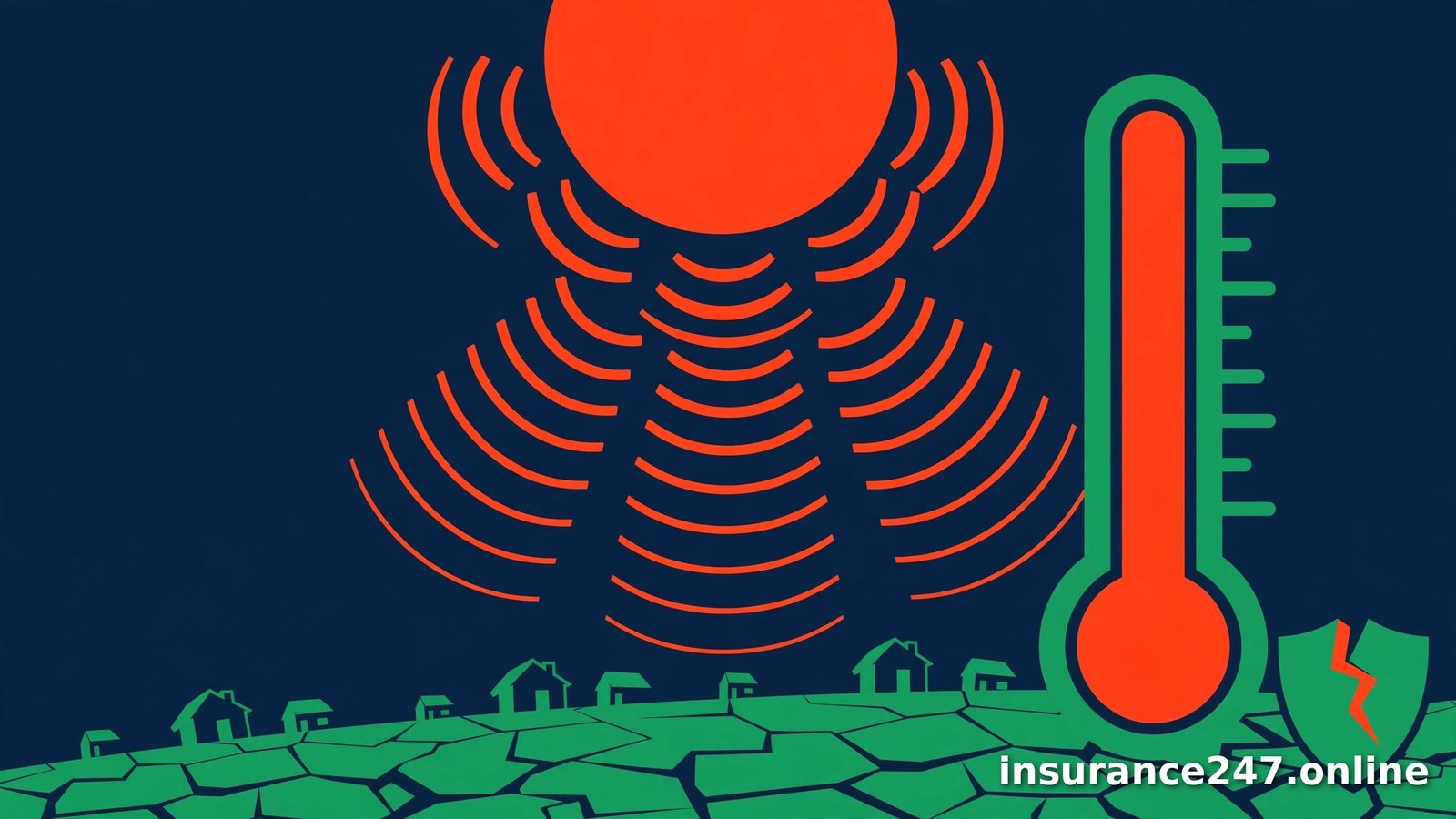
For the insurance industry, the heat is not just a headline — it is a balance-sheet problem. As extreme weather becomes more frequent and more severe, the insurance protection gap between the damage that weather causes and the damage that insurance actually covers is growing wider than ever.
The Insurance Protection Gap in Numbers
The scale of the insurance protection gap is stark. Only about 43% of weather-related damages are insured, according to research by Oliver Wyman and Marsh McLennan. That leaves an annual shortfall of about US$132 billion — damage that falls on households, businesses and governments rather than on insurers.
At the same time, the losses insurers do pay are climbing fast. The Swiss Re Institute’s Sigma 1/2026 report found that insured losses from natural catastrophes are rising by 5% to 7% a year in real terms. In other words, even the insured share of the damage is growing quickly, year after year.
Allianz has said publicly that climate change keeps adding to the list of assets becoming uninsurable. When the risk of damage in a particular place becomes too high or too unpredictable, insurers either raise prices sharply or stop offering cover altogether. That is no longer a warning about the future — it is already happening.
Insurers Are Dropping Policies
In the United States, the insurance protection gap is visible in the retreat from high-risk areas. According to the National Association of Insurance Commissioners (NAIC), US insurers initiated just over 2 million non-renewals in 2024, up 61% from the year before. Non-renewal rates rose in every NAIC region between 2018 and 2024, by between 96% and 216%.
The West recorded the highest non-renewal rate, at 25.1 per 1,000 policies in 2024, followed by the Southeast — two regions hit hard by wildfires and hurricanes respectively. For the homeowners affected, a non-renewal means scrambling for cover elsewhere, often at a much higher price, or going without insurance at all.
The consequences reach beyond individual households. A September 2026 paper by NYU Stern professors Mary Billings and Stephen Ryan found that a one-percentage-point rise in non-renewals is associated with a 0.91-percentage-point increase in the local foreclosure rate. When homes lose insurance, mortgages become harder to maintain, and the damage ripples through whole communities.
Home Insurance Is Getting More Expensive — and Harder to Get
The cost of the cover that remains is climbing. Insurify projected that the average US home insurance price would climb 4% in 2026 to $3,057 a year, after jumping 12% in 2025. Since 2021, home insurance costs have risen 46%.
As prices rise and policies are dropped, the insurance protection gap grows and more homes are going uninsured. The share of uninsured US homes rose from 5% in 2019 to 12% in 2025. That means roughly one in eight American homes now has no insurance protection at all — a figure that would have been hard to imagine just a few years ago.
What the Industry Is Doing About It
The insurance industry gathered to discuss the insurance protection gap at the COP31 Global Sustainable Insurance Summit, held in Antalya on 13-14 November 2026 and organised by UNEP FI and the Insurance Association of Türkiye. The summit brought insurers together to discuss how the sector can respond to a warming world — a conversation that now has to cover everything from pricing climate risk to finding ways to keep cover affordable in high-risk areas.
What This Means for You
If you own a home, especially in an area exposed to wildfire, flood or hurricanes, the insurance protection gap is not an abstract statistic — it is a risk to your finances. Check whether your policy still covers the full cost of rebuilding, and do not assume your insurer will renew automatically. If you receive a non-renewal notice, start looking for alternatives straight away, and ask your broker about state-backed or specialist options.
The bigger picture is that 2026’s record heat is a warning. As the climate warms, insurance is becoming more expensive, harder to get and less complete — and the gap between the damage and the cover is one that households are increasingly left to fill themselves.
Related reading: the gap is showing up in results too — see how Allianz posted a record profit even as storm claims hit its property business, and why commercial insurance premiums have fallen for a third straight quarter.
Frequently Asked Questions
Q: Is 2026 really the hottest year on record? A: Berkeley Earth, an independent climate research group, says it is 95% confident that 2026 will be the hottest year in recorded history. The World Meteorological Organization is more cautious but still places 2026 among the four warmest years on record.
Q: What is the insurance protection gap? A: It is the difference between total losses from weather disasters and the share covered by insurance. Only about 43% of weather-related damage is insured, leaving an annual shortfall of roughly US$132 billion, according to Oliver Wyman and Marsh McLennan research.
Q: Why are insurers dropping homeowners in some areas? A: Rising climate-driven claims are making some regions unprofitable to insure, widening the insurance protection gap. US insurers initiated just over 2 million homeowner policy non-renewals in 2024, up 61% on the year before, with the highest rates in the West and Southeast.